


This post is also available in:
 Español (Spanish)
Cats, dogs, and horses have blood remarkably similar to that of humans. They, too, have been affected by the five major immunosuppressing pollutants and now suffer from new diseases as a result. However, their recovery capacity is usually much faster. If you have a terminally ill pet and wish to try one more time, here is the procedure.
Part I: Water, food, and supplements
1. Clean water
Use only distilled water, free from chlorine, heavy metals, solvents, or dyes. Rainwater is ideal when collected properly (after 30 minutes of continuous rainfall) and filtered through activated charcoal that has been boiled. Do not use bottled water (even in glass) or tap water. If your pet does not drink it willingly, administer it with a polyethylene dropper.
2. Food
Eliminate all canned, frozen, or processed foods. Prepare meals from scratch using organic turkey, lamb, or beef. Boil until soft, divide into portions, and freeze. Serve warm.
Avoid meat containing additives, colorants, or bleaches. For commercial meats, disinfect and depolarize using an ozonator and zappicator.
Use stainless steel or HDPE utensils and dishes, and dry with dye- and fragrance-free paper towels.
3. Daily supplements
(Use droppers or small spoons as measures)
- Black walnut hull tincture: 1 drop mixed into non-ozonated cream
- Wormwood: a pinch
- Clove: a pinch
- Digestive enzymes (lipase–pancreatin)
- Lugol’s iodine
- Vitamins B2, C, and coenzyme Q10
- Selenium hydroxide, hydrangea root powder, turmeric
- 5% hydrochloric acid
Observations: If fever, sneezing, or loss of coordination appear, adjust with Lugol’s iodine, Oscillococcinum, or Reishi. Provide water with or without Lugol between meals. If there is no bowel movement for 2 days, perform a warm-water enema with Lugol, under veterinary supervision.
Part II: Homeography
Homeography helps remove dyes, industrial oils, and heavy metals accumulated in the animal’s organs and white blood cells.
Use 15 mL amber polyethylene dropper bottles, without rubber parts, filled with distilled or filtered rainwater. Each preparation is polarized using a positive-offset zapper. Drops must be applied separately, as they can neutralize each other if mixed.
Homeographic procedure:
- Use only polyethylene bottles (no glass or rubber).
- Use distilled or filtered rainwater as the base.
- Polarize each bottle with a positive-offset zapper.
- Prepare organ drops: right kidney, left kidney, right-kidney WBCs, and left-kidney WBCs.
- Prepare “take-out” drops to remove dyes, bearing grease, and motor oil from each of the organs above.
- Administer 3 drops per dose directly onto the gums, front teeth, or inner lip (do not touch with the dropper).
- Give drops 6 times a day for 2 days, then once daily for 1 week.
- Allow at least 1 minute between different drops to prevent interference.
- Do not refrigerate or place near magnets or electronic devices.
- Monitor saliva and urine: if traces of dyes or metals persist after 4 days, review water, food, and supplements.
If the animal improves quickly, this phase may be omitted; if not, it is essential for internal detoxification.
Part III: Zapping
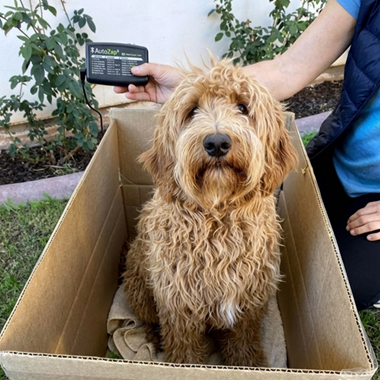
Zapping is an electrical method that stimulates the immune system, helping the animal’s body eliminate parasites, bacteria, and viruses. Though it may seem miraculous, its effect is based on a simple principle: a mild positive voltage, applied repeatedly to the skin, strengthens white blood cells, restoring their ability to attack and digest invading microorganisms.
Requirements for effective zapping:
White blood cells must be nourished with organic germanium, sodium selenite, and vitamin C (preferably from rose hips).
How to zap pets:
- The session should be pleasant; many animals become playful or energized afterward.
- The animal can be gently placed on moist electrodes or fitted with special collars or boot pads for pets.
- Avoid direct human contact with the current by wearing plastic gloves or insulating with a plastic bag.
- Repeat several short sessions daily; repetition has a cumulative effect.
Signs that zapping is working:
- The animal may vomit, defecate, or become more active and curious.
- It may reject old foods or treatments, a positive sign.
Important:
Improvement does not mean instant cure. Maintain a clean diet, pure water, homeographic treatment, and antiparasitic herbs.
For advanced stages or long-term support, DMSO may be added (1 drop daily in fresh water on an empty stomach) to help eliminate toxic residues such as industrial greases.
Never combine conventional antiparasitic drugs with herbs. The herbs act mainly in the digestive tract, preventing systemic toxicity.
Final recommendations
Switching to uncontaminated food and water must be permanent. If improvement occurs, prevent relapse by maintaining this diet and clean water for life.
For ongoing support, DMSO (1 drop daily in water on an empty stomach) can be given together with the kidney drops.
Do not use pharmaceutical antiparasitics while giving herbal cleanses.
For dogs, double all listed doses.
The most common cancers in dogs and cats are:
| Dogs | Cats |
|---|---|
| Lymphoma | Lymphoma |
| Mast cell tumors | Squamous cell carcinoma |
| Osteosarcoma (bone cancer) | Mammary cancer |
| Hemangiosarcoma | Fibrosarcoma |
| Mammary tumors | Intestinal cancer |
| Melanoma | Oral squamous cell carcinoma |
| Soft tissue sarcomas | Injection-site sarcoma |
| Oral cancer | Leukemia |
| Brain tumors | Liver cancer |
| Testicular cancer | Pancreatic cancer |
| Bladder cancer | Lung cancer |
| Anal gland cancer | Brain tumors |
| Prostate cancer | Kidney cancer |
| Liver cancer | Mast cell tumors |
| Lung cancer | Nasal tumors |
Source: Dr. Hulda R. Clark, “The Prevention of All Cancers” (2004), pp. 532–564.


Leave a Reply
You must be logged in to post a comment.